Driver•i
Fleet-safety ecosystem
Project 02
Using field research and systems thinking to reduce fleet-device installation time by more than 57%.
Core result
>57%
Reduction in overall installation time
Executive summary
Two devices and different communication mechanisms created a fragmented installer journey.
Field research exposed where transitions, validation and retries were slowing deployment.
A unified workflow shifted technical orchestration from the installer to the application.
01Context
Driver•i and HubX worked together in the customer solution. Driver•i provided the core fleet-safety ecosystem; HubX was a separate MDVR system built by an external vendor.
Driver•i
Fleet-safety ecosystem
HubX
External-vendor MDVR system
The integration enabled HubX video to be accessed through the Driver•i ecosystem and uploaded to the cloud on demand. My contribution focused on the integration and installation experience—not ownership of the HubX hardware product.
02The installation problem
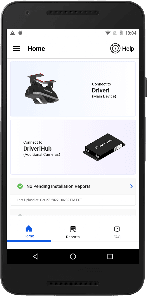
Both devices used the same installer application, but different communication mechanisms forced installers through repeated connection and disconnection steps while configuring and validating the system.
“The underlying technical architecture was dictating the user experience. I believed it should be the other way around.”
Long installation times
Fragmented workflows
Installer complexity
More error opportunities
Fleet-scale inefficiency
My role
I treated the challenge as an end-to-end product and system-design problem—not simply an installer-app UI problem.
I worked across field teams, installer research, Customer Success, customers and engineering; mapped the complete workflow; identified required installation information; defined the redesigned experience; and drove the product architecture for a unified journey.
03Discovery
The redesign began by understanding the real installation journey, the operational failures around it, and the technical constraints underneath it.
Installers
Where was time being lost?
Field teams
What failed during deployment?
Customer Success
What generated support and escalation?
Customers
What affected rollout speed?
Engineering
What technical constraints existed between the devices?
04Before → After
The technical complexity still existed. The installer no longer had to manage it.
Before
The installer was managing the architecture.
After
The application managed the architecture.
“The technical complexity still existed. The installer no longer had to manage it.”
05Product decision
A screen-level UX refresh would not solve a workflow created by the underlying system. The product decision was to organize the experience around installer intent rather than device architecture.
Driver•i and HubX
Device communication
Installer application
Data capture and validation
Backend and cloud interactions
Field operations
06Systems thinking
Reliable installation emerged from the interaction of devices, software, data and operations—not from any one interface in isolation.
Device architecture
Application UX
Field workflow
Data validation
Operations
System outcome
Installation experience
07Impact
>57%
Reduction in overall installation time
Fewer device connection transitions
Simpler installer workflow
Fewer opportunities for installation errors
Faster fleet deployment
More scalable installation process
08Lessons
Architecture eventually becomes user experience.
Field research exposes problems that dashboards cannot.
Operational workflows are part of the product.
“The best solution was not to teach installers how to manage the complexity. It was to design the complexity out of their workflow.”